
美妝頻道的收益,關鍵在回訪觀眾看了多久
How do users contribute to YouTube channels' revenue? An empirical analysis of Korean beauty channels
Sewon Eom · Jaeyoung Park · Eugene Choi · Park Jinho · Seongcheol Kim* * 通訊作者
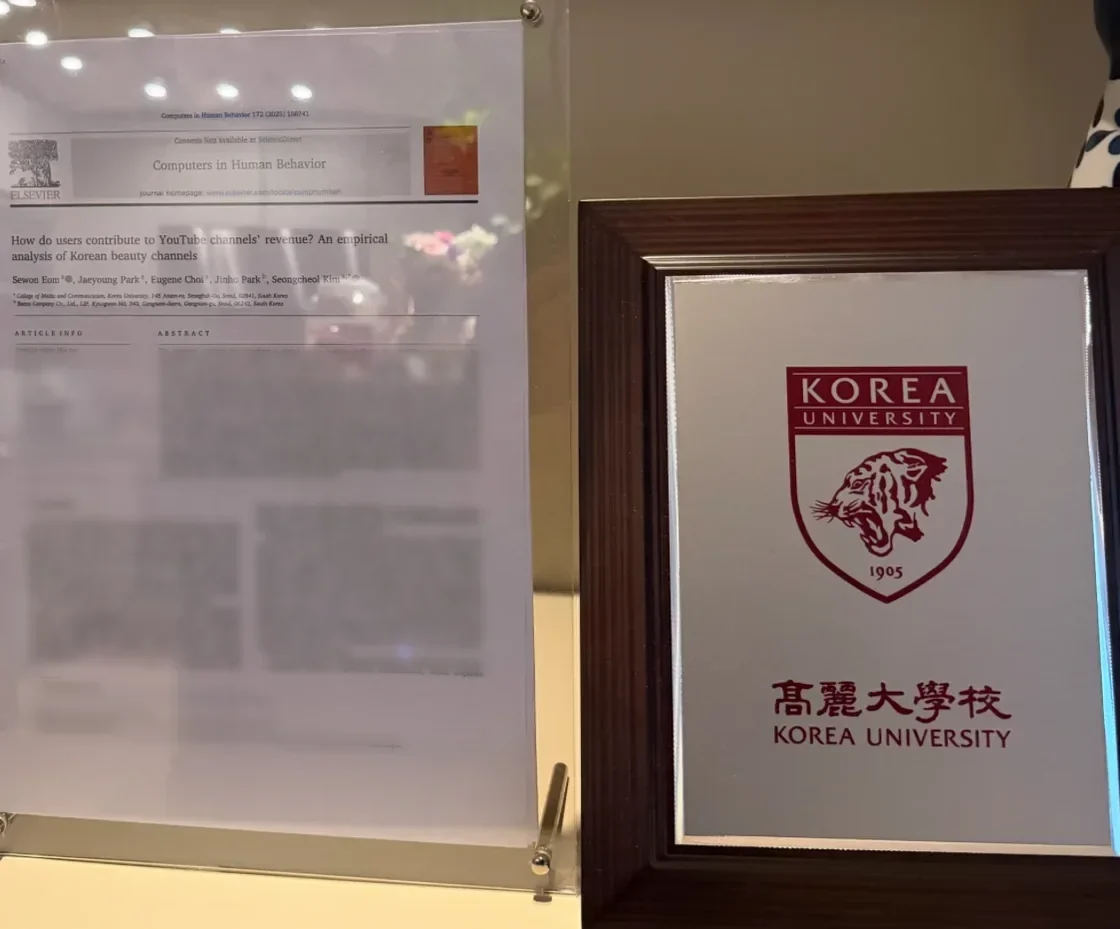
BEAUS COMPANY 拍攝。共同論文(Computers in Human Behavior)印刷本與高麗大學銘牌。畫面中含期刊名與大學標記。來源:公司網站素材。確認日:2026-11-24(Asia/Seoul)。
比起播放次數或按讚,已經看過、又再回來的人停留多久,更能說明頻道的每月收益。這是高麗大學媒體大學金成澈教授研究團隊,與 BEAUS COMPANY 代表 Park Jinho 的共同論文,刊登於2025年11月的Computers in Human Behavior。
論文書目
- 原文標題
- How do users contribute to YouTube channels' revenue? An empirical analysis of Korean beauty channels
- 期刊
- Computers in Human Behavior 172, 108741
- 刊登
- 2025-11
- DOI
- https://doi.org/10.1016/j.chb.2025.108741
- 期刊頁面
- https://www.sciencedirect.com/science/article/pii/S0747563225001888
- 全文
- 本篇不是開放取用。請至期刊或所屬機構閱讀全文。本站未上傳 PDF。
- 所屬單位
- 未能從出版社頁面確認各作者所屬單位,故留空。
正式摘要(英文)
以下為高麗大學 Pure 公開的正式摘要原文。原則上應與 Elsevier 期刊頁面摘要相同,但本次作業未能通讀 ScienceDirect 全文。
The platform economy has transformed digital media, making platforms like YouTube central spaces for participation and economic exchange. Unlike conventional media models that focus solely on audience size, YouTube's monetization system relies on user engagement metrics that shape algorithmic visibility, directly impacting revenue generation through advertising and commerce. In this context, users are active agents and co-creators of value, influencing YouTube's success through their interactions. This study explores user agency in beauty-focused YouTube revenue through a four-stage framework: cognitive, affective, conative, and active agency. This study analyzed panel data from 50 beauty channels using fixed-effects regression and examined how engagement metrics—new viewer watch time, returning viewer watch time, subscriber watch time, and likes—affect monthly revenue. The analysis employs fixed-effects regression models to capture both the static and dynamic effects of user engagement. Results show that watch time significantly predicts revenue, with returning viewer watch time (affective agency) as the most significant factor. New viewer (cognitive agency) and subscriber (conative agency) watch time contribute positively but less so, while likes (active agency) showed no statistically significant effect. The findings emphasize fostering affective agency by engaging returning viewers while balancing all engagement stages. These insights offer actionable strategies for creators and platforms to optimize revenue in the competitive digital content landscape.
先看結論
若只看訂閱數、單次播放或按讚來判斷收益,會有落差。正式摘要最強調的指標,是已經看過的人再次回來、停留了多久。
在這份分析裡,按讚對每月收益並未達統計顯著。台灣操盤網紅或 KOL 業配時,若把「互動看起來很熱」和「真的留下業績」當成同一個數字,合作條件就容易偏掉。
研究看了什麼
正式摘要寫道:以固定效果迴歸分析50個美妝頻道的追蹤資料。檢視的指標包括新觀眾觀看時長、回訪觀眾觀看時長、訂閱者觀看時長,以及按讚。依變數是每月收益。
研究把使用者行為分成認知、情感、意向與主動四個階段。回訪觀眾的觀看時長屬於其中的情感行為(affective agency)。
公司研究介紹與部分報導寫過「超過2,100個月」的追蹤期。這個數字沒有出現在高麗大學 Pure 的摘要句子裡,也尚未與論文正文核對。本頁圖表只用摘要載明的50個頻道。

用台灣的網紅檔期來看
台灣美妝檔期同樣快,短影音也容易一波爆紅。但若觀眾看完就離開、下一支不再回來,頻道很難累積。品牌若只拿播放數談 KOL 報價,可能把一次性流量當成長期效益。
我們會先看回訪觀眾停留多久,而不是只看播放次數。本頁不能取代論文全文。
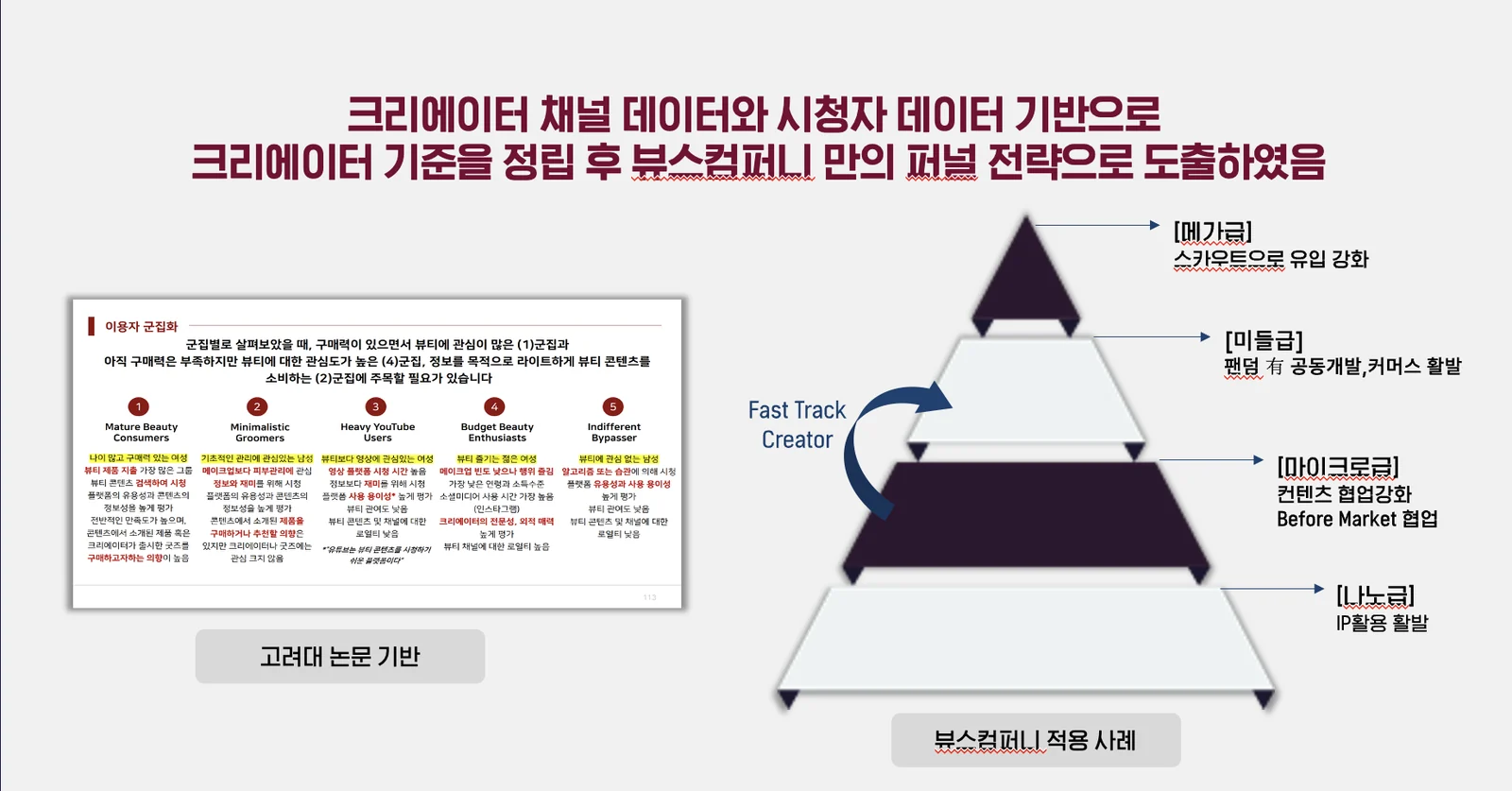
本頁為 BEAUS COMPANY 的解說。正式表述與數字以期刊頁面及上方引用的摘要為準。圖表只呈現摘要所述方向,未放入係數。